Home network security suite · iPhone · iPad · Mac
Every device on your Wi‑Fi, and what to do about the risky ones.
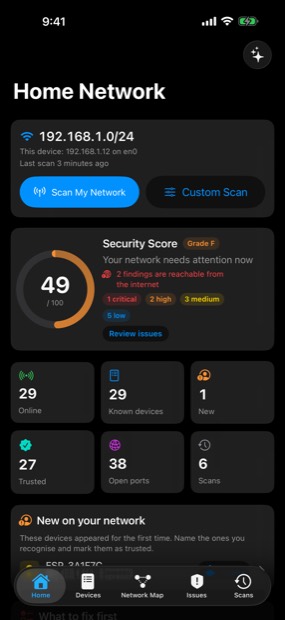
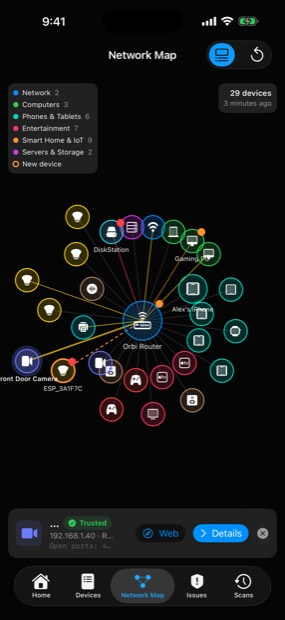
Crios scans the network you're on, names each device by maker and model, scores what it finds out of 100, and explains each fix in words anyone can act on — including what stops working if you close a port.
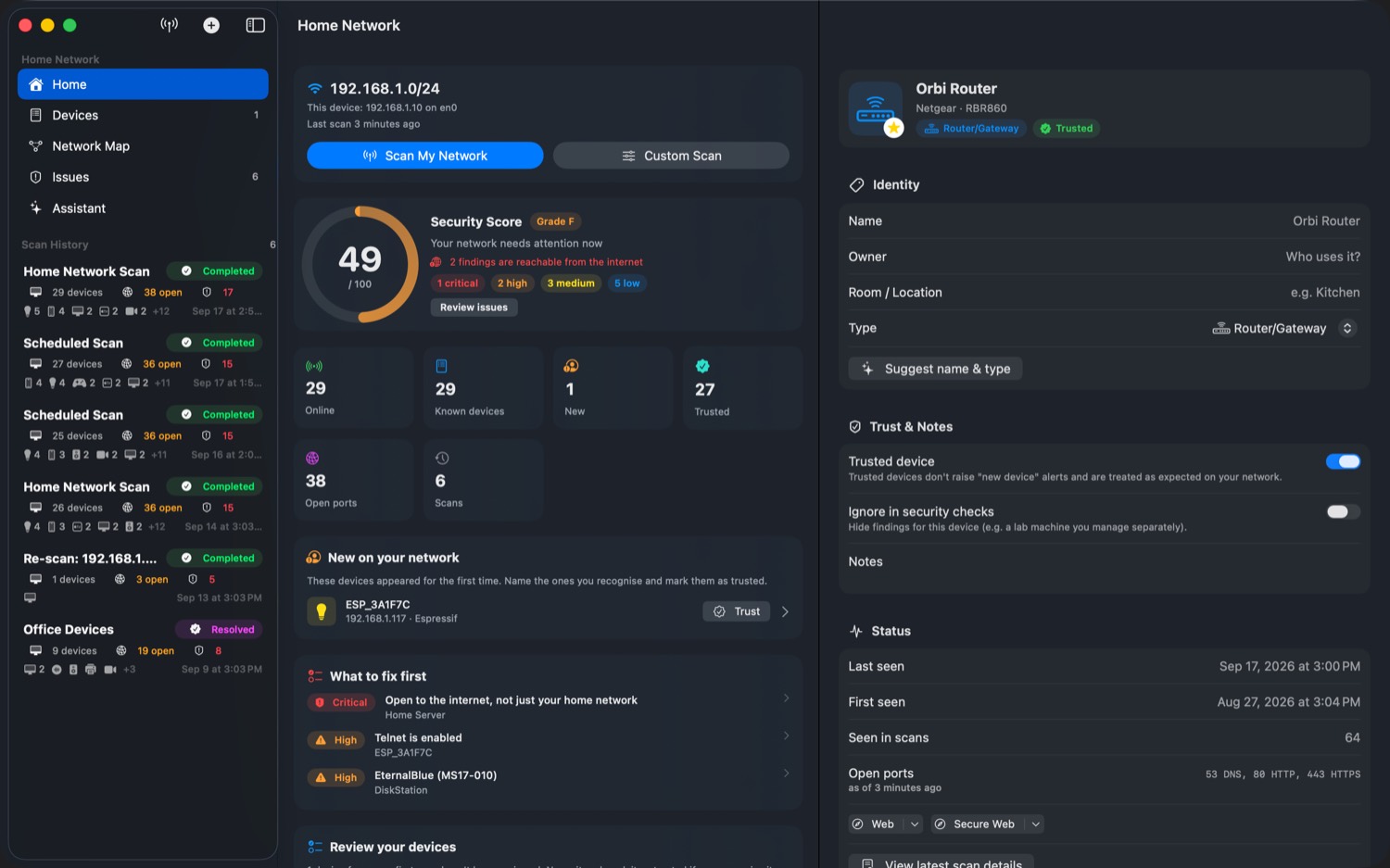
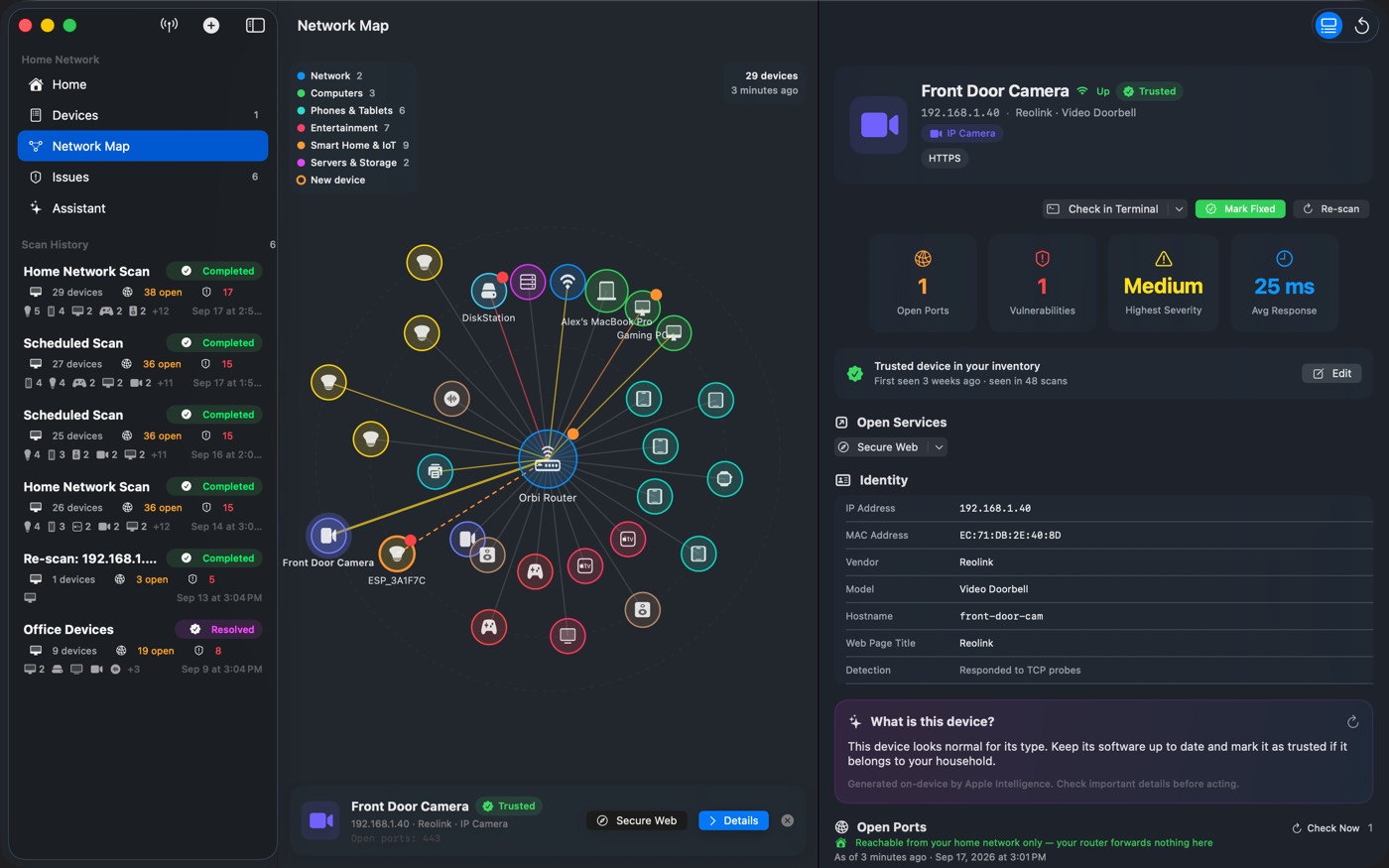
- 192.168.1.1 Orbi Router UPnP: IGD
- 192.168.1.14 Living Room TV 8001 Tizen
- 192.168.1.31 DiskStation 445 SMB
- 192.168.1.70 Home Server 32400 forwarded
- 192.168.1.117 ESP_3A1F7C 23 Telnet
- 192.168.1.118 Galaxy Tab A9 new device
Discovery
It finds the phone with no open ports, too.
A fast liveness sweep counts a refused connection as proof a device is there, so locked‑down phones and laptops show up. Then Crios asks the network who everyone is: Bonjour names, UPnP models, hostnames, MAC vendors on Mac, and a light service fingerprint.
ID Named, not numbered
“Living Room Apple TV” and “Brother printer”, not a column of addresses. Maker, model and platform where the network reveals them.
- Bonjour, UPnP and reverse DNS
- MAC vendor lookup on Mac
- Web titles and service banners
INV A roster you own
Name each device, set its owner and room, add notes, mark it Trusted. The roster persists across scans and follows IP changes by hardware address.
- Trusted devices stop raising alerts
- New arrivals are flagged, not buried
- Export as CSV or JSON
NEW Told when it changes
Crios remembers what each device had open. When something unfamiliar joins, or a known device opens a new port, it says so.
- Notifications for first‑time devices
- Newly opened ports per device
- Scheduled re‑scans on Mac
Exposure
An open port at home is not the same as one open to the world.
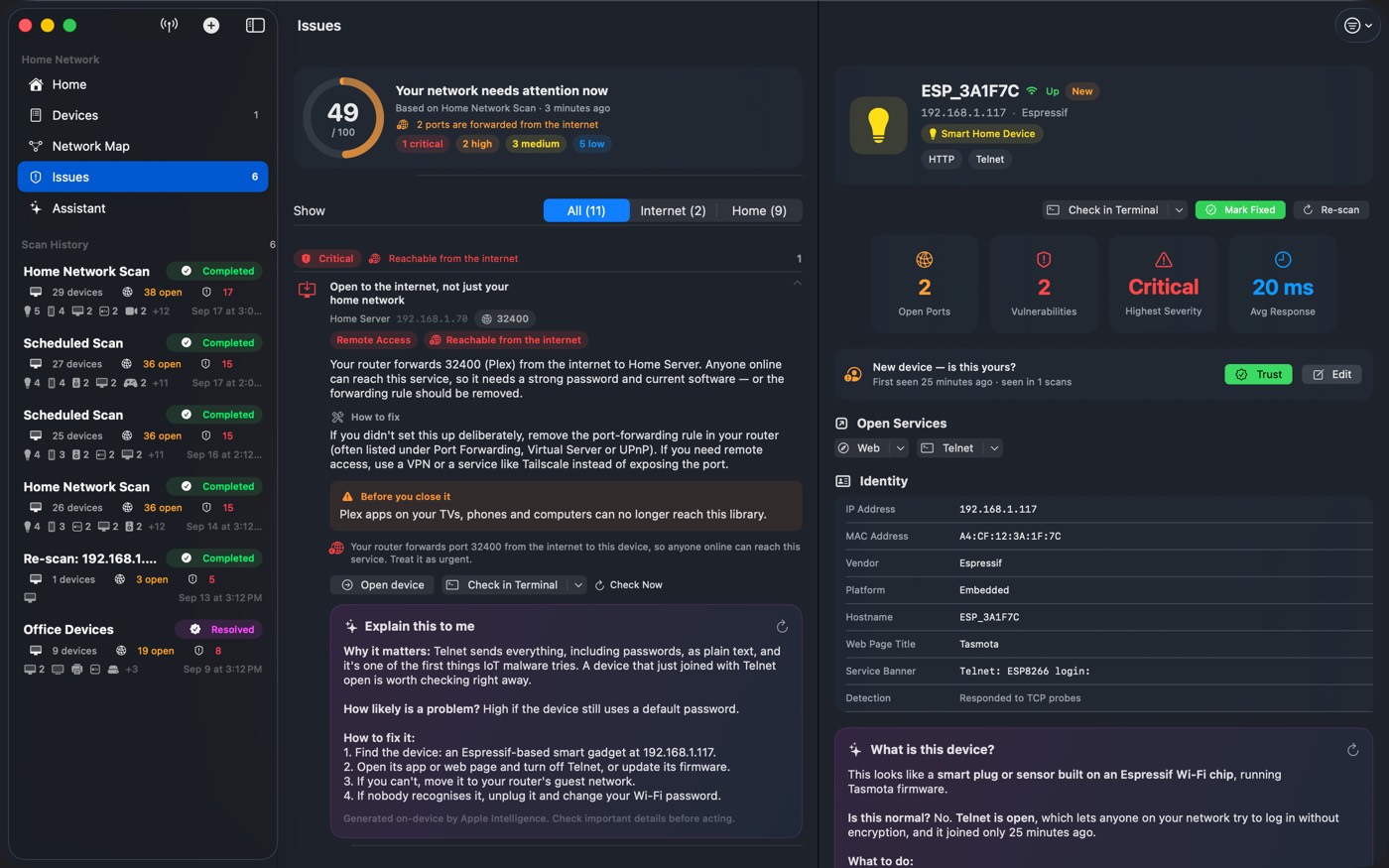
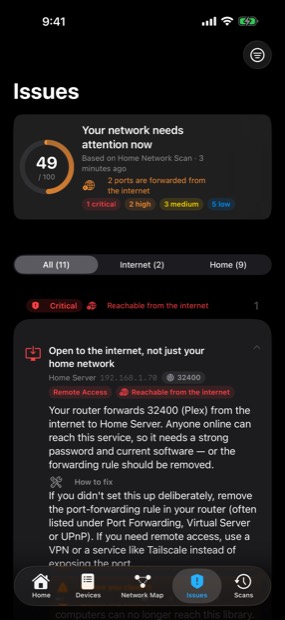
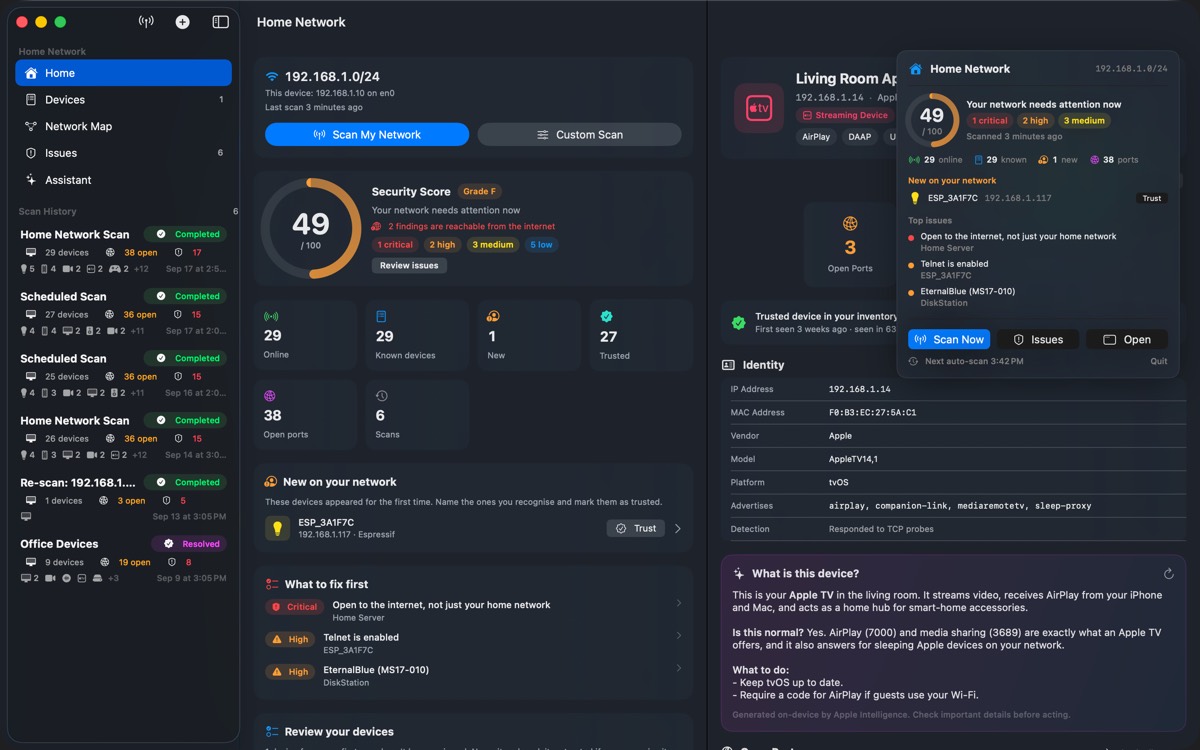
Most scanners treat every finding as equally urgent. Crios asks your router — over UPnP, read‑only — which ports it actually forwards from the internet, then rates each finding accordingly.
Internet‑facing problems move up a severity level. Ones your router confirmed are home‑only move down, and never disappear. The Issues list splits into All, Internet and Home so you fix what's reachable first.
Plex on 32400 · Home Server
Forwarded from the internet, so anyone online can reach it. Severity raised; fix it or remove the rule.
SMB on 445 · DiskStation
Your router forwards nothing here. Still worth fixing, but the risk is limited to devices already on your Wi‑Fi.
Consequences
It warns you before you break your own network.
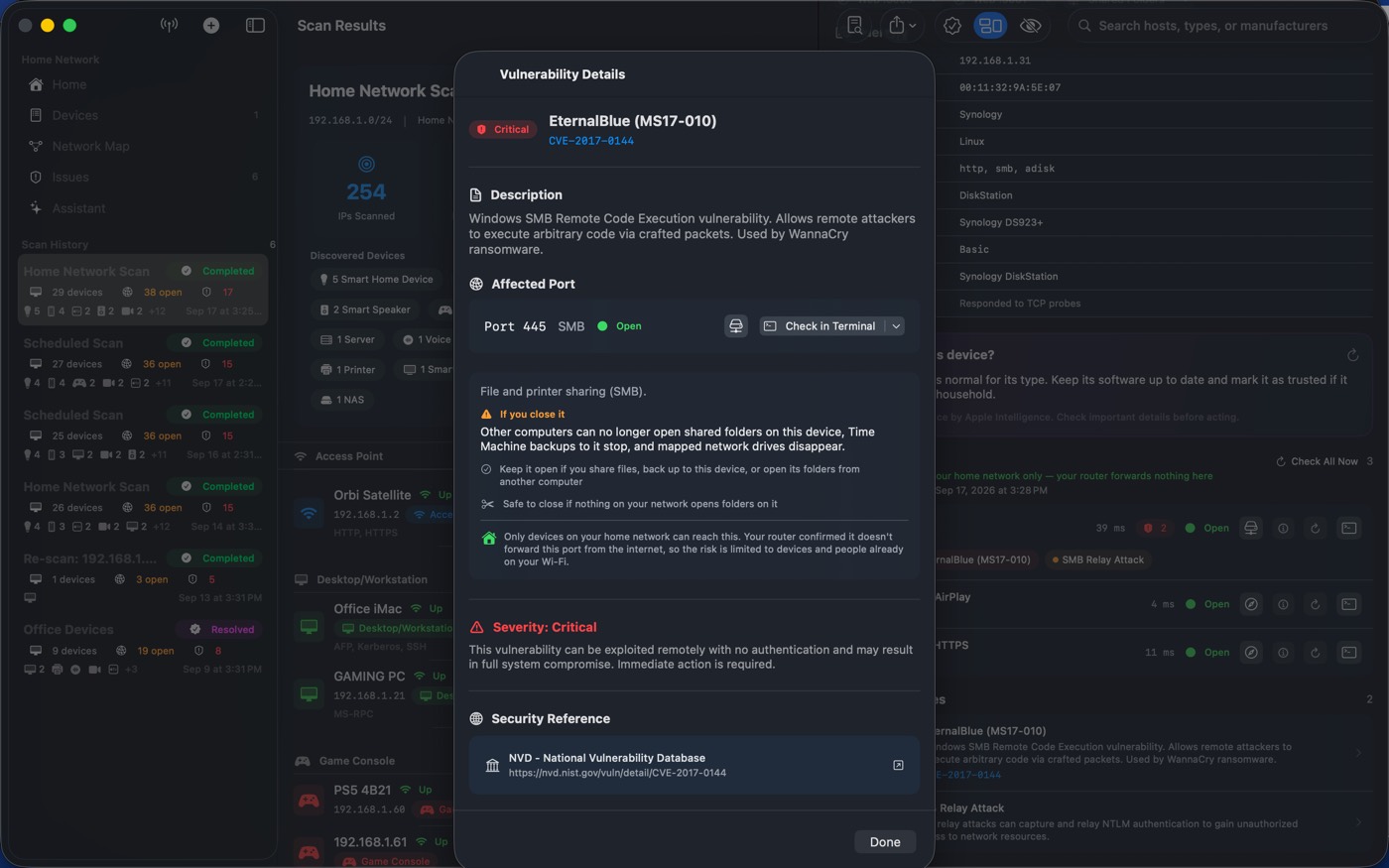
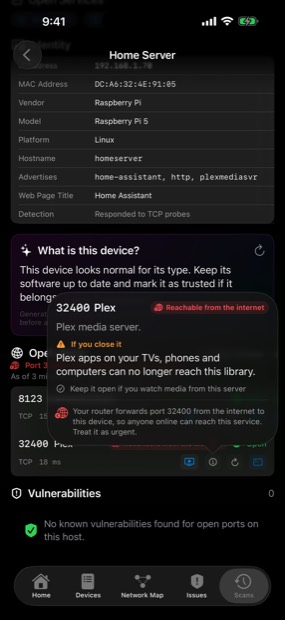
Turning a port off is easy advice to give and easy to regret. Every open port in Crios explains what it's for, what stops working without it, and when it's genuinely safe to close.
Other computers can no longer open shared folders on this device, Time Machine backups to it stop, and mapped network drives disappear.
✓ Keep it if you share files, back up here, or open its folders from another computer ✂ Safe to close if nothing on your network opens folders on itFixed something? Re‑check a single port in place, or re‑scan the device for a before‑and‑after count of closed, still‑open and newly‑open ports.
Apple Intelligence · on device
Ask your network a question.
Crios can explain any device or finding in plain language, write a short briefing for the whole network, suggest a name for something unfamiliar, and answer questions using your real scan data.
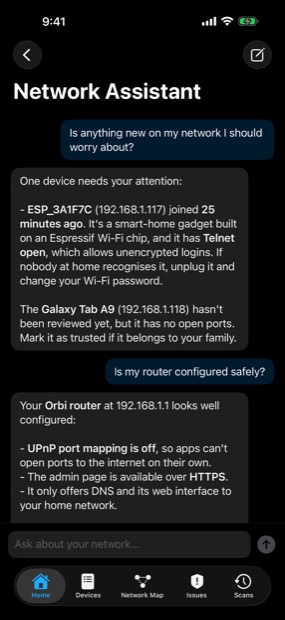
Is anything new on my network I should worry about?
Crios assistant
One device needs your attention: ESP_3A1F7C (192.168.1.117) joined 25 minutes ago. It's a smart‑home gadget built on an Espressif Wi‑Fi chip, and it has Telnet open, which allows unencrypted logins. If nobody at home recognises it, unplug it and change your Wi‑Fi password.
Runs with Apple's on‑device model. Your scan data never leaves the device. Requires a supported device with Apple Intelligence turned on.
One app, three places
Built for the Mac you manage from and the phone in your pocket.
A shield in the menu bar
Your score sits in the menu bar with new devices, the top issues and a Scan Now button. Schedule re‑scans, read MAC vendors, and re‑check any port in Terminal with a ready‑made command.
The map, full size
The whole suite in a sidebar layout: dashboard, roster, network map, issues and the assistant, with room to read a finding and its fix side by side.
Scan from the couch
Tap once to sweep the Wi‑Fi you're on, name a new device, open a printer's page in Safari, or copy a port‑check command for your computer.
Screens
What it looks like at work.
Scroll sideways →
Questions
Straight answers.
Does Crios scan my network without sending data anywhere?
Yes. Scanning, device identification, the security score and the Apple Intelligence explanations all run on your device. There is no account, no cloud service and no analytics, so scan results and your device inventory stay on your iPhone, iPad or Mac.
How does Crios know whether an open port is reachable from the internet?
It asks your router, read-only over UPnP, which ports the router forwards from the internet. Findings on a forwarded port are raised one severity level; findings the router confirms are reachable only on your home network are lowered one level, never below Low.
Will Crios tell me what breaks if I close a port?
Yes. 39 ports carry a plain-language warning. Closing file sharing on port 445, for example, stops other computers opening shared folders on that device, stops Time Machine backups to it and removes mapped network drives.
Does it show MAC addresses on iPhone?
iOS and iPadOS do not give apps access to MAC addresses, so hardware-address vendor lookup is a Mac feature. On iPhone and iPad, devices are identified by Bonjour names, hostnames, UPnP models and service fingerprints instead.
Can I use Crios on a network I do not own?
No. Crios is for networks you own or manage. Scanning ports on other people's networks may breach local law or your provider's terms.
Know your network
Find out what's on your Wi‑Fi tonight.
One scan builds your device roster, scores your network and tells you the three things worth fixing. Everything stays on your device.
Use Crios on networks you own or manage. Scanning ports on other people's networks may breach the law or your provider's terms. Screenshots show an example home network.